
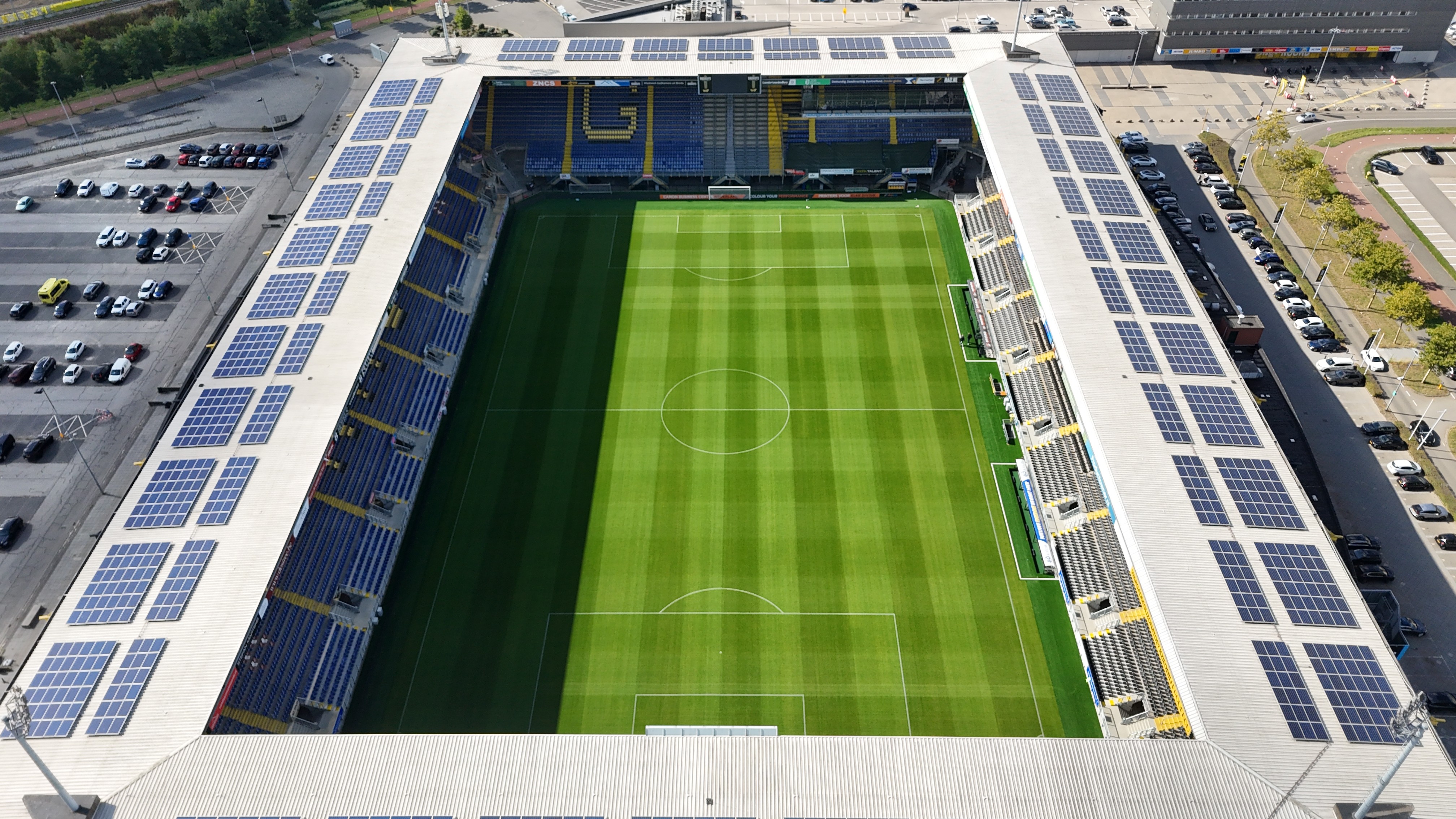
A comprehensive second-opinion structural assessment for a professional football stadium, ensuring long-term safety, durability, and confident decision-making.
Project Overview: Independent Structural Second Opinion
The NAC Breda Stadium project involved an independent structural second opinion carried out by AR-TEC to provide clear insight into the stadium’s current condition and long-term reliability. The primary objective was to assess safety, durability, and service life, ensuring the structure remains suitable for intensive use with full-capacity crowds—both today and in the decades to come.
Assessment Focus: Safety, Durability & Long-Term Use
The review went beyond a snapshot of the current condition. AR-TEC evaluated whether the existing structure can sustainably support repeated crowd loading, operational demands, and environmental influences over time. The assessment emphasized long-term performance rather than short-term fixes.
Structural Review: Concrete & Steel Components
Key concrete and steel elements of the stadium were reviewed, including grandstand structures, floors, connections, and primary steel systems. A detailed visual inspection was conducted to identify cracking, wear, and signs of potential corrosion, all assessed from a durability and life-cycle perspective.
Structural Risks & Load Considerations
The evaluation included structural risks related to crowd loading, dynamic effects, temperature variations, and existing structural detailing. Particular attention was given to how these factors interact over time and their impact on long-term safety and reliability.
Second-Opinion Reporting: Clear, Actionable Guidance
AR-TEC delivered a clear and structured technical report for club management and stakeholders. The report translated engineering findings into practical recommendations, covering monitoring strategies, maintenance priorities, and follow-up actions to support informed decision-making.
Long-Term Strategy: Data-Driven Asset Management
AR-TEC’s approach focused on objective clarity—combining visual assessment with verifiable observations, measurements, and maintenance planning. This enables future decisions to be based on facts and data, rather than assumptions.